-1_edited.png)
Shockwave Therapy Chesterfield, VA: Complete Guide to Benefits, Treatment & Conditions

Updated: May 5
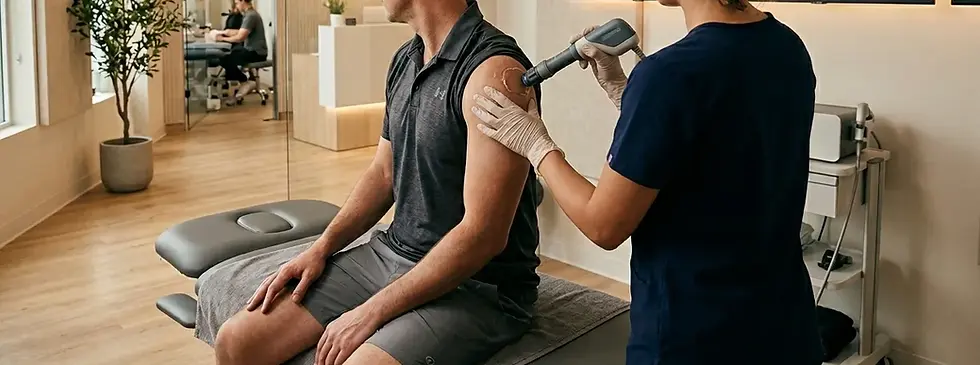
Shockwave therapy is a proven, non-invasive treatment using high-energy sound waves to heal musculoskeletal pain without surgery or drugs. Ideal for chronic issues like plantar fasciitis, tennis elbow, and tendon injuries, it boosts blood flow, breaks down calcifications, and triggers natural recovery. Learn benefits, how it works, safety, and more in this simple guide from Brain Repair Store in Chesterfield, VA.
What Is Shockwave Therapy?
Shockwave therapy is a non-invasive treatment that uses low-energy sound waves (acoustic waves) sent through a gel to reach deep tissues. These waves trigger the body's natural healing, reduce pain, boost mobility, and improve function. It's ideal for musculoskeletal issues like tendon and ligament problems no surgery or anesthesia needed.
What Are The Benefits Of Shockwave Therapy?
Shockwave therapy offers key biological benefits:
Non-invasive for acute and chronic pain
No anesthesia required
Quickly decreases pain
Increases mobility and function
Few side effects
Cost-effective for musculoskeletal conditions
Principles Of Shockwave Therapy
Four main generation principles power shockwave devices:
Electrohydraulic
Piezoelectric
Electromagnetic
Radial or Ballistic
Most devices focus waves in a "focal zone" deep in the tissue (several cm ahead). Waves travel via gel to this zone for max effect. Always target the exact spot for best results.
What Are The Treatment Parameters?
Key settings include energy flux density (EFD: 0.05–0.25 mJ/mm² for trigger points), pressure, and frequency (up to 4 Hz focused; 10–15 Hz radial to minimize pain).
Match EFD to muscle depth/thickness-keep pain tolerable.
Use caution with small applicators to avoid bruising.
Combo approach: 200–400 focused waves, then 3000–4000 radial.
Sessions: 1 per week (allows 3-day recovery from soreness).
Cost of Shockwave Therapy in Chesterfield, VA
The cost of shockwave therapy in Chesterfield, VA typically ranges from:
$100 to $500 per session
The total cost depends on:
Number of sessions needed
Clinic and equipment used
Severity of the condition
How Does Shockwave Therapy Work?
Shockwaves have a positive phase (mechanical force) and a negative phase (cavitation bubbles that implode, creating secondary waves). They deliver high peak pressure (0–120 MPa), short pulses, and low-frequency waves (0–20 MHz)—far stronger than ultrasound.
No heat involved. Effects: better blood flow, collagen growth, leukocyte activity, and tissue repair.
APPLICATION
Physio assesses the patient first. Apply gel, place the applicator, and set the tolerable intensity (no standard protocol). Pair with exercises. Typical plan: 1 session/week for 3–6 weeks. Sessions last 15–20 min; return to activities right away.
Conditions Treated By Shockwave Therapy?
Great for chronic pain and slow-healing issues:
Neck/back pain (cervical/lumbar)
Tendinopathies (Achilles, patellar, tennis/golfer's elbow)
Plantar fasciitis, heel spurs
Frozen shoulder, rotator cuff calcifications
Sciatica, carpal tunnel
IT band syndrome, bursitis
Knee osteoarthritis, jumper's knee
Sports injuries, fractures, repetitive strain
Contact The Brain Repair Store +1 804-895-6004 Book now :
Is Shockwave Therapy Covered by Insurance?
Insurance coverage varies. Some plans may cover it if it’s medically necessary, while others may not. It’s best to check with your provider or clinic.
Why Choose Shockwave Therapy?
If you are dealing with long-term pain and want to avoid surgery or medication, shockwave therapy can be a great option. It’s quick, effective, and helps your body heal naturally.
Final Thoughts
Shockwave therapy is becoming one of the most trusted treatments for pain relief in Chesterfield, VA. Whether you have a sports injury or chronic joint pain, this therapy offers a safe and simple way to recover faster and live pain-free.
What Are The Side Effects Of Shockwave Therapy?
Mild and short-lived: tenderness, swelling, or soreness for a few days (triggered by inflammation). Rare bruising if parameters are off. Safe when done by pros, no major risks for most.
Is Shockwave Therapy Safe?
Yes, for most patients, non-invasive, with no brain/memory effects like ECT. Avoid if pregnant, with clotting issues, infections, or tumors. Always get a pro evaluation.
Is Shockwave Therapy Covered By Insurance?
Varies: Often yes for medically necessary chronic conditions; check your plan. Providers differ by location/policy.


Great guide—very clear breakdown of how Shockwave Therapy works and what conditions it can help with in modern treatment. Really helpful read.